Rainha Hatshepsut: uma história de poder, inovação e seu templo-obra-prima
Rainha Hatshepsut: uma história de poder, inovação e seu templo-obra-prima
08 Feb 2026
Índice
A ascensão da rainha Hatshepsut: de regente a faraó
A história além do hipnotizante templo de Hatshepsut
O Projeto do Templo de Hatshepsut
Como posso visitar o Templo da Rainha Hatshepsut
Quais são algumas dicas para visitar o Templo da Rainha Hatshepsut
Rainha Hatshepsut: uma história de poder, inovação e seu templo-obra-prima
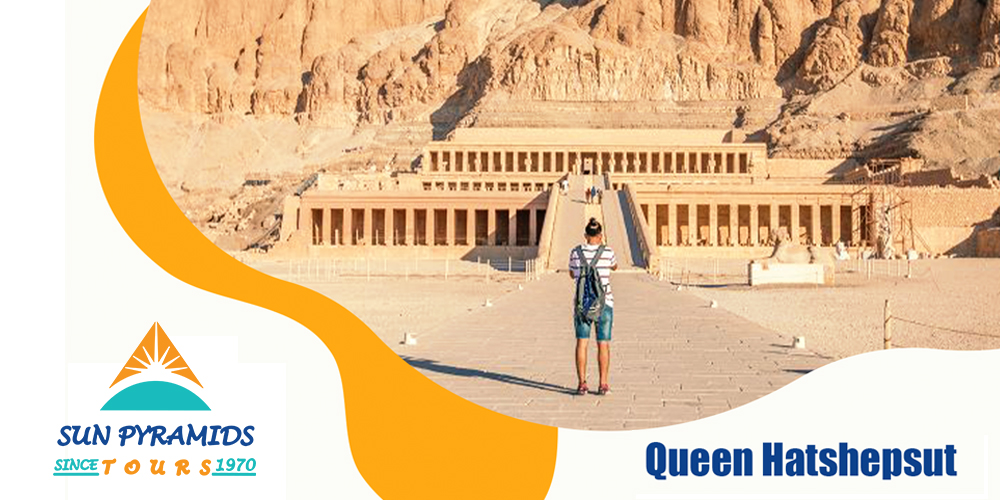
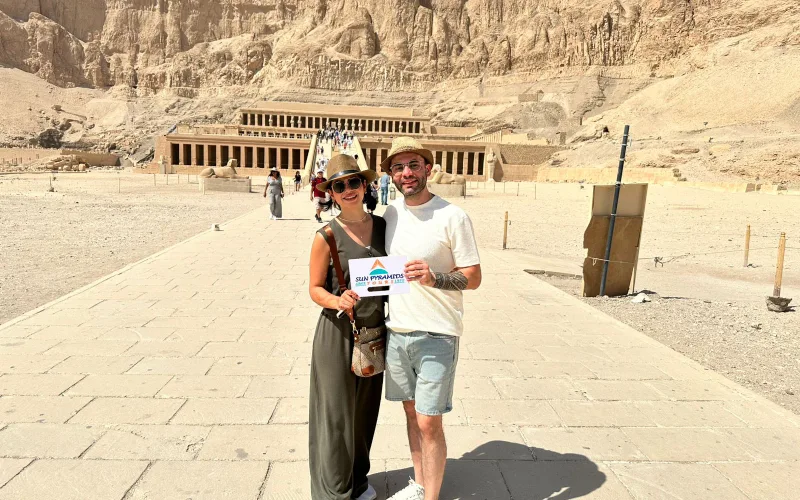
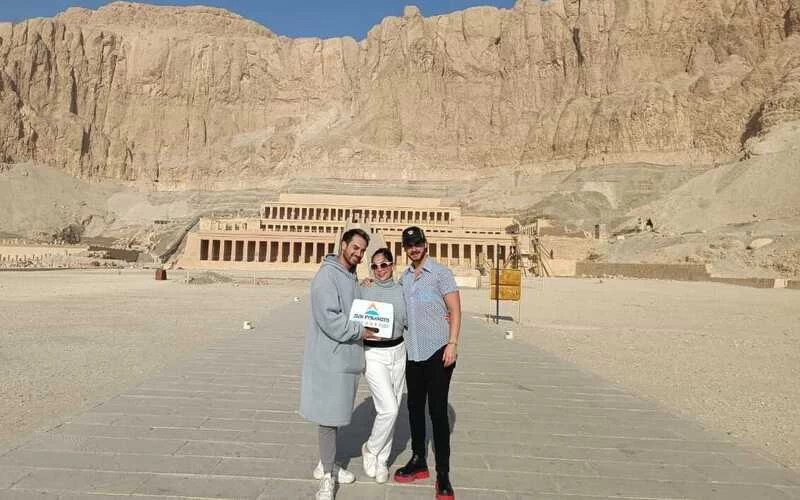
Um dos monumentos mais notáveis do antigo Egito, o Templo da Rainha Hatshepsut, está localizado na margem oeste do Nilo, em frente a Luxor. Ele foi construído pela faraó mulher Hatshepsut, que governou o Egito de 1479 a 1458 a.C., como uma homenagem ao deus Amon e ao seu próprio legado.
Neste artigo, apresentaremos os detalhes mais impressionantes do Templo Mortuário de Hatshepsut, incluindo sua história, arquitetura e o reinado de uma famosa faraó feminina. Além disso, forneceremos dicas e informações valiosas para a sua visita.

A ascensão da rainha Hatshepsut: de regente a faraó

A ascensão da Rainha Hatshepsut ao trono do Egipto é uma história notável de ambição e inteligência política.Nascida por volta de 1507 aC, filha do Faraó Tutmés I e de sua esposa principal, Ahmós, Hatshepsut era bem versada nas complexidades da corte egípcia desde tenra idade.Após a morte de seu pai, ela se casou com seu meio-irmão, Tutmés II, e se tornou a Grande Esposa Real.
Quando Tutmés II morreu prematuramente, deixando para trás um filho pequeno, Tutmés III, Hatshepsut assumiu o papel de regente de seu jovem filho rei.No entanto, ela logo assumiu todos os poderes de um faraó, tornando-se co-governante de Tutmés III, que mais tarde se tornaria um dos conquistadores mais famosos do antigo Egito, conhecedor da história.
O reinado de Hatshepsut foi marcado por ambiciosos projectos de construção, incluindo a construção do magnífico Templo de Deir el-Bahri e a expansão das rotas comerciais egípcias.Seu caminho único para o poder e sua capacidade de manter a estabilidade e a prosperidade no Egito fazem dela uma das mulheres faraós mais famosas da história.
A história além do hipnotizante templo de Hatshepsut


O Templo da Rainha Hatshepsut foi construído entre o sétimo e o vigésimo ano de reinado de Hatshepsut, o que corresponde aproximadamente a 1473 a 1458 aC.O templo foi inspirado no antigo templo mortuário de Mentuhotep II (c. 2061-2010 aC), que fundou o Reino Médio do Egito e foi reverenciado por Hatshepsut.Outros templos antigos, como os de Karnak e Luxor, também influenciaram o templo.
O arquiteto do templo é um conselheiro ou amante de confiança?
O Templo da Rainha Hatshepsut foi construído por milhares de trabalhadores egípcios que foram pagos e organizados por Hatshepsut’administração.O arquiteto-chefe e supervisor do projeto foi Senenmut, que também era Hatshepsut’seu conselheiro de confiança e possivelmente seu amante.Senenmut projetou o templo para se harmonizar com a paisagem natural e refletir Hatshepsut’s crenças religiosas e ambições políticas.
O propósito do Templo da Rainha Hatshepsut
O Templo da Rainha Hatshepsut foi usado como templo mortuário para Hatshepsut e um centro de culto para Amun-Re e outras divindades.O templo servia como um local onde eram feitas oferendas, recitadas orações, celebrados festivais e realizados rituais para beneficiar Hatshepsut.’sua alma na vida após a morte.O templo também serviu como ferramenta de propaganda para Hatshepsut’a legitimidade de sua mulher como faraó e suas conquistas como governante.
O Projeto do Templo de Hatshepsut


O Templo da Rainha Hatshepsut é um complexo de três terraços que se elevam do solo do deserto até a base dos penhascos atrás dele.O templo cobre uma área de cerca de 7,4 hectares (18,3 acres) e tem um comprimento total de cerca de 365 metros (1.198 pés).O templo compreende várias câmaras, santuários, pórticos e estátuas que refletem a visão artística e religiosa de Hatshepsut e de seu arquiteto Senenmut.
Quais são alguns dos destaques do Templo da Rainha Hatshepsut?
O Templo da Rainha Hatshepsut tem muitas características que o tornam único e fascinante.Algumas das coisas mais impressionantes que você pode ver no Templo de Hatshepsut:
- O santuário da barca de Amun-Re, localizado no terraço superior, onde era guardada uma réplica do barco sagrado do deus e exposta durante as festas.
-
Os relevos da expedição a Punt, localizados no terraço do meio, retratam a missão comercial que Hatshepsut enviou à misteriosa terra de Punt (possivelmente a atual Somália ou Eritreia) para obter produtos exóticos como olíbano, mirra, ébano, ouro e animais.
-
Os relevos do nascimento divino de Hatshepsut, localizados no terraço do meio, mostram como Hatshepsut afirmou ser filha de Amun-Re e de sua consorte humana Ahmose.
-
Os santuários de Hathor e Anúbis, localizado no terraço do meio, homenageia a deusa do amor e da música e o deus da mumificação e da vida após a morte.
-
As estátuas de Hatshepsutcomo uma esfinge ou um Osíris, localizados no terraço inferior, demonstram seu poder e autoridade como faraó.
- O templo do vale, localizado no final de uma ponte que liga o templo ao Nilo, onde eram realizados rituais e cerimônias antes de entrar no templo.
Como posso visitar o Templo da Rainha Hatshepsut?


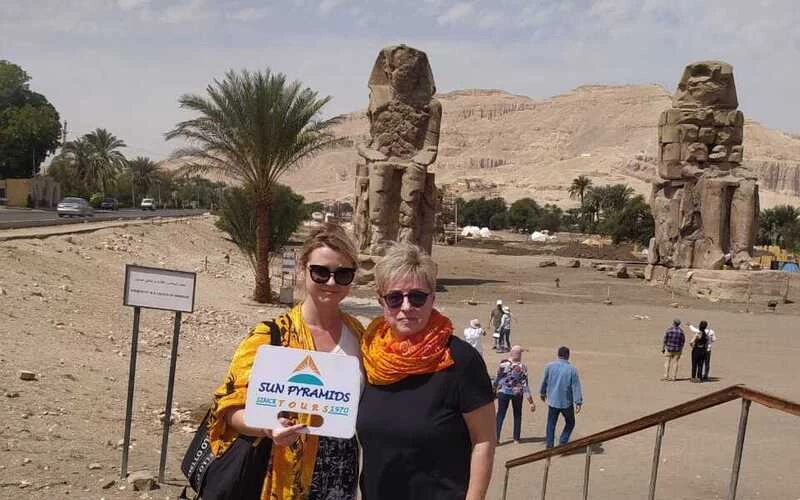
O Templo Rainha Hatshepsut está aberto à visitação todos os dias das 6h00 às 17h00.A taxa de entrada é de 100 libras egípcias (cerca de 6 dólares americanos) para adultos e 50 libras egípcias (cerca de 3 dólares americanos) para estudantes.Você pode chegar ao templo de carro, táxi, ônibus ou bicicleta saindo de Luxor ou de outras atrações próximas, como o Vale dos Reis ou os Colossos de Memnon.Você também pode participar de uma visita guiada com transporte, ingressos e comentários.
Experimente o Templo de Hatshepsut e outras atrações de Luxor com o Sun Pyramids Tours! Nossos guias especializados fornecerão insights e uma experiência de viagem perfeita. Reserve hoje a sua aventura e mergulhe nas maravilhas do antigo Egito!
Quais são algumas dicas para visitar o Templo da Rainha Hatshepsut?
Aqui estão algumas dicas para tornar sua visita mais agradável e memorável:
- Use sapatos confortáveis, chapéu, óculos escuros e protetor solar, pois você caminhará muito tempo ao sol.
- Leve água e lanches, pois não há lojas ou cafés dentro ou perto do templo.
- Respeite as regras e regulamentos do local, como não tocar ou subir em nada, não tirar fotos com flash e não jogar lixo.
-
Aprecie a beleza e a história do templo e aprenda mais sobre Hatshepsut e seu notável reinado.
Por que devo reservar com a Sun Pyramids Tours?
O Egito recebe calorosamente os visitantes com seu majestoso rio Nilo, paisagens desérticas e o fértil Delta, além de seus marcos impressionantes e inspiradores. Com nossos pacotes turísticos para o Egito, você terá a oportunidade de descobrir as maravilhas mais fascinantes da terra dos faraós, incluindo as icônicas Pirâmides de Gizé, a Grande Esfinge, Abu Simbel, os templos de Karnak e muito mais. O rio Nilo também é o cenário perfeito para um de nossos cruzeiros pelo Nilo, onde você pode navegar pela história e admirar os magníficos monumentos entre Luxor e Aswan. A oportunidade está bem aqui para você — não perca, reserve conosco hoje mesmo!
.DvizhAGb.gif)
Plan your next adventure now
Passeios relacionados
.jpg)
.jpg)
.jpg)
.jpg)
.jpg)
.jpg)
Passeios de 4 dias Cairo e Luxor de avião
Passeios de 4 dias Cairo e Luxor de aviã...
A partir de
$681.00
4 dias

.webp)
Cruzeiro de 5 dias no Nilo no Royal Beau Riva...
Cruzeiro de 5 dias no Nilo no Royal Beau...
A partir de
$1448.00
5 dias
Cruzeiro de 4 dias no Nilo no Movenpick Royal...
Cruzeiro de 4 dias no Nilo no Movenpick ...
A partir de
$1518.00
3 noites/4 dias
Cruzeiro de 5 dias no Nilo no Mövenpick Royal...
Cruzeiro de 5 dias no Nilo no Mövenpick ...
A partir de
$1936.00
4 Noites/5 Dias


Pirâmides de 12 dias, Luxor, Aswan e Hurghada...
Pirâmides de 12 dias, Luxor, Aswan e Hur...
A partir de
$2040.00
12 dias / 11 noites
Cruzeiro de 4 dias no Nilo no Royal Beau Riva...
Cruzeiro de 4 dias no Nilo no Royal Beau...
A partir de
$1130.00
4 dias
Pacote 5 dias 4 noites Movenpick MS Sunray Cr...
Pacote 5 dias 4 noites Movenpick MS Sunr...
A partir de
$1925.00
5 dias

Sonesta Sun Goddess 5 dias de Luxor a Aswan
Sonesta Sun Goddess 5 dias de Luxor a As...
A partir de
$0.00
5 dias
Sonesta Deusa do Sol 4 dias de Aswan a Luxor
Sonesta Deusa do Sol 4 dias de Aswan a L...
A partir de
$0.00
4 dias
Pacote 4 dias 3 noites Movenpick MS Sunray Cr...
Pacote 4 dias 3 noites Movenpick MS Sunr...
A partir de
$1490.00
4 dias
Pacote 4 dias 3 noites Movenpick MS Hamees Cr...
Pacote 4 dias 3 noites Movenpick MS Hame...
A partir de
$1415.00
4 dias
Pacote 5 dias 4 noites Movenpick MS Hamees Cr...
Pacote 5 dias 4 noites Movenpick MS Hame...
A partir de
$1825.00
5 dias
Pacote 8 dias 7 noites para luxo no Egito, Lu...
Pacote 8 dias 7 noites para luxo no Egit...
A partir de
$2120.00
8 dias / 7 noites
4 noites no cruzeiro Nile Crown saindo de Lux...
4 noites no cruzeiro Nile Crown saindo d...
A partir de
$505.00
5 dias
Perguntas Frequentes
Ver mais

There are no frequently asked questions :)
Blog relacionado
Planeje uma Viagem ao Egito
+1 more
Guia Definitivo: Como Planejar uma Viagem ao Egito
Natal e Ano Novo no Egito
+1 more
Natal e Ano Novo no Egito
.webp)
Joias escondidas do Egito
+1 more
Joias escondidas do Egito

Templo de Abu Simbel
+1 more
Templo de Abu Simbel
Precisa de ajuda para encontrar sua viagem?

Offers

Make Trip

trips

Home