The Rising of Queen Hatshepsut: From Regent to Pharaoh
The Story Beyond the Mesmerizing Hatshepsut Temple
The Design of Hatshepsut Temple
How can I visit Queen Hatshepsut Temple
What are some tips for visiting Queen Hatshepsut Temple
Why do I book with Sun Pyramids Tours
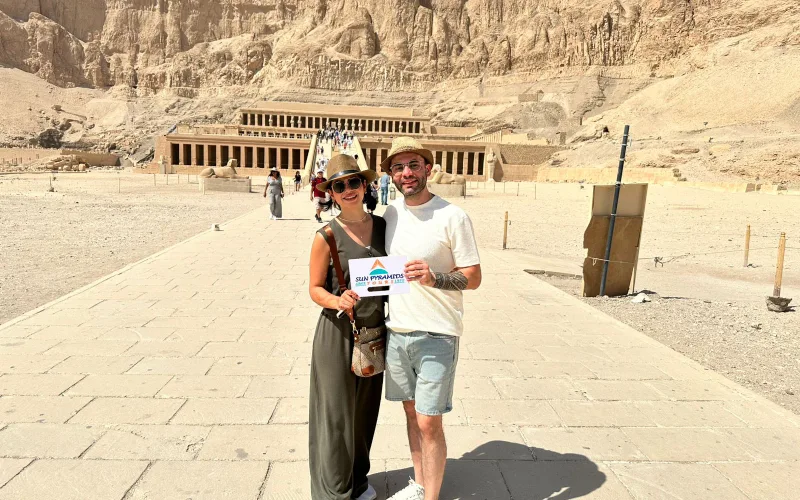
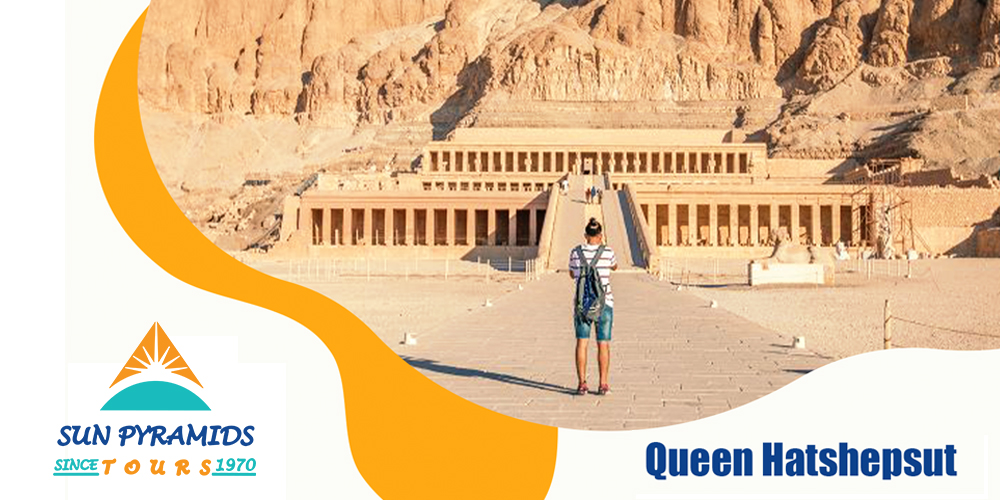
One of the most remarkable monuments of ancient Egypt, Queen Hatshepsut Temple, is located on the west bank of the Nile opposite Luxor. It was built by the female pharaoh Hatshepsut, who ruled Egypt from 1479 to 1458 BCE, as a tribute to the god Amun and her own legacy.
In this article, we will showcase the most impressive details about The Mortuary Temple of Hatshepsut, including its history, architecture, and the reign of a renowned female pharaoh. Moreover, we will give you valuable tips and information for your visit.


Queen Hatshepsut's rise to the throne of Egypt is a remarkable story of ambition and political cleverness. Born around 1507 BC as the daughter of Pharaoh Thutmose I and his principal wife, Ahmose, Hatshepsut was well-versed in the complexities of the Egyptian court from an early age. After her father's death, she married her half-brother, Thutmose II, and became the Great Royal Wife.
When Thutmose II died prematurely, leaving behind a young son, Thutmose III, Hatshepsut took the role of regent on her young king son. However, she soon took on the full powers of a pharaoh, becoming a co-ruler with Thutmose III, who will become later one of the most famous conquerors of ancient Egypt, knowing history.
Hatshepsut's reign was marked by ambitious building projects, including the construction of the magnificent Temple of Deir el-Bahri, and the expansion of Egyptian trade routes. Her unique path to power and her ability to maintain stability and prosperity in Egypt make her one of the most famous female pharaohs in history.


Queen Hatshepsut Temple was built between Hatshepsut's seventh and twentieth year of reign, which corresponds to roughly 1473 to 1458 BCE. The temple was inspired by the earlier mortuary temple of Mentuhotep II (c. 2061-2010 BCE), who founded the Middle Kingdom of Egypt and was revered by Hatshepsut. Other ancient temples, such as those at Karnak and Luxor, also influenced the temple.
Queen Hatshepsut Temple was built by thousands of Egyptian workers who were paid and organized by Hatshepsut’s administration. The chief architect and overseer of the project was Senenmut, who was also Hatshepsut’s trusted advisor and possibly her lover. Senenmut designed the temple to harmonize with the natural landscape and to reflect Hatshepsut’s religious beliefs and political ambitions.
Queen Hatshepsut Temple was used as a mortuary temple for Hatshepsut and a cult center for Amun-Re and other deities. The temple served as a place where offerings were made, prayers were recited, festivals were celebrated, and rituals were performed to benefit Hatshepsut’s soul in the afterlife. The temple also served as a propaganda tool for Hatshepsut’s legitimacy as a female pharaoh and her achievements as a ruler.


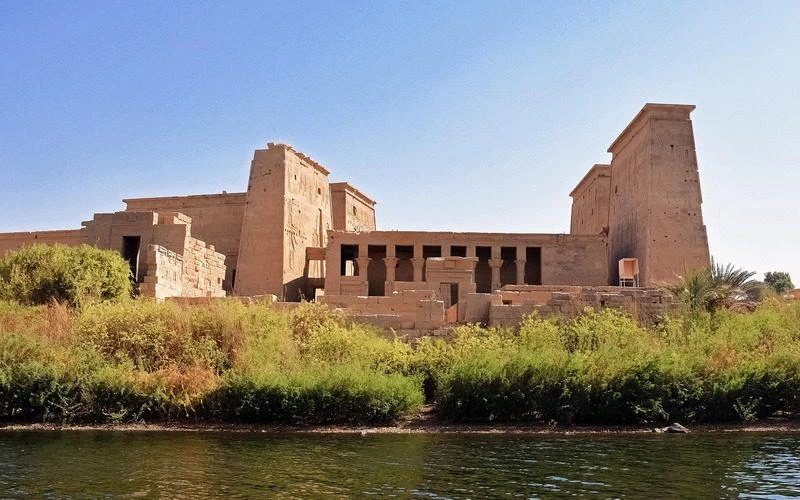
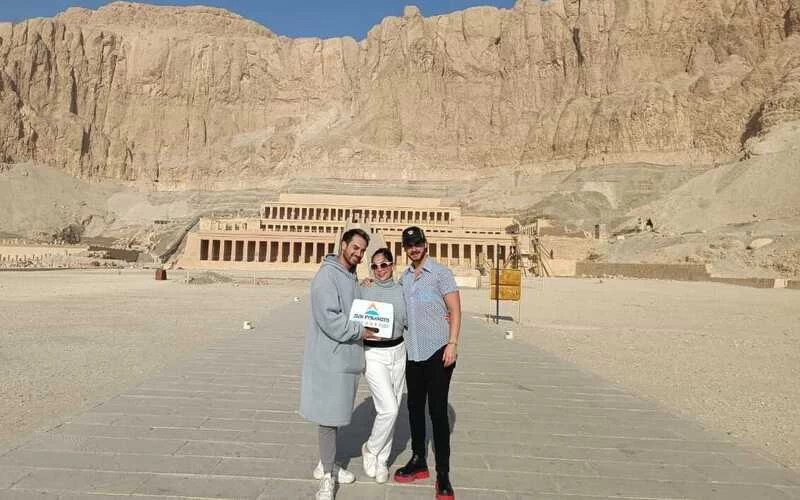
Queen Hatshepsut Temple is a complex of three terraces that rise from the desert floor to the base of the cliffs behind it. The temple covers an area of about 7.4 hectares (18.3 acres) and has a total length of about 365 meters (1,198 feet). The temple comprises various chambers, sanctuaries, porticoes, and statues that reflect Hatshepsut's artistic and religious vision and her architect Senenmut.
What are some of the highlights of Queen Hatshepsut Temple?
Queen Hatshepsut Temple has many features that make it unique and fascinating. Some of the most impressive things you can see at Hatshepsut Temple:
The reliefs of the expedition to Punt, located on the middle terrace, depict the trade mission that Hatshepsut sent to the mysterious land of Punt (possibly modern-day Somalia or Eritrea) to obtain exotic goods such as frankincense, myrrh, ebony, gold, and animals.
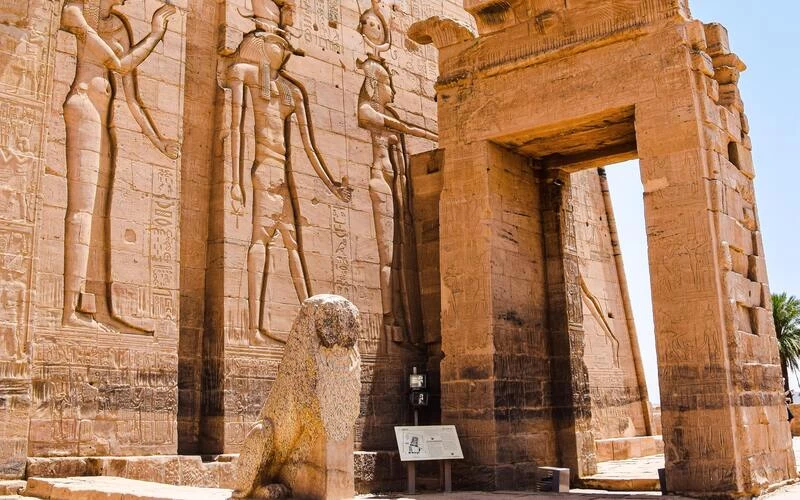
The reliefs of the divine birth of Hatshepsut, located on the middle terrace, show how Hatshepsut claimed to be the daughter of Amun-Re and his human consort Ahmose.
The shrines of Hathor and Anubis, located on the middle terrace, honor the goddess of love and music and the god of mummification and the afterlife.
The statues of Hatshepsut as a sphinx or an Osiris, located on the lower terrace, demonstrate her power and authority as a pharaoh.


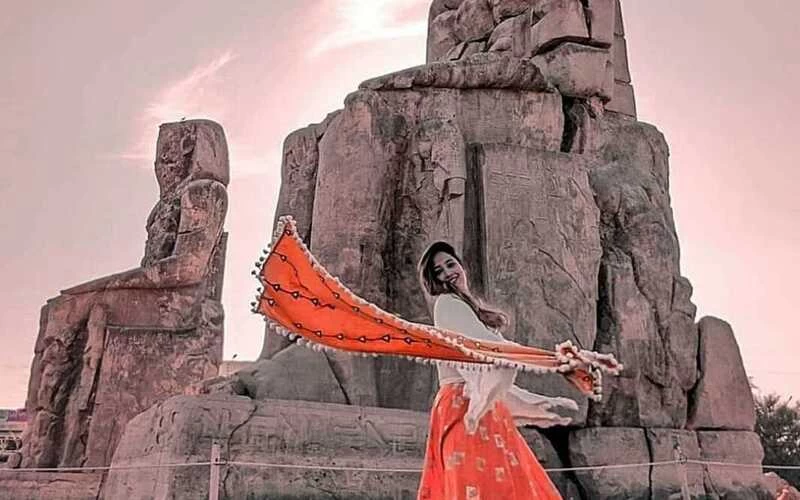
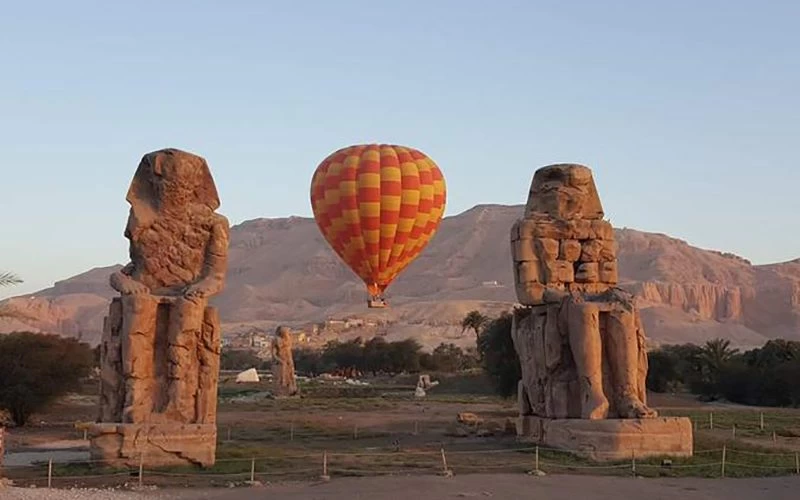
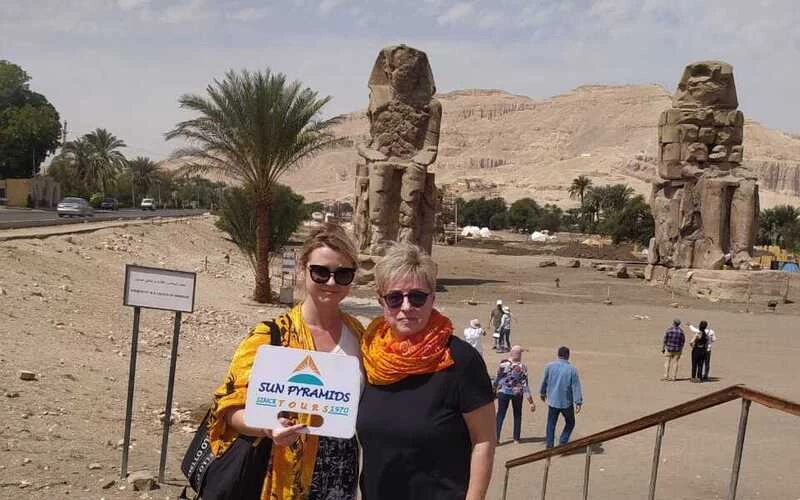
Queen Hatshepsut Temple is open to visitors every day from 6:00 a.m. to 5:00 p.m. The entrance fee is 100 Egyptian pounds (about 6 US dollars) for adults and 50 Egyptian pounds (about 3 US dollars) for students. You can reach the temple by car, taxi, bus, or bike from Luxor or other nearby attractions such as the Valley of the Kings or the Colossi of Memnon. You can also join guided tour with transportation, tickets, and commentary.
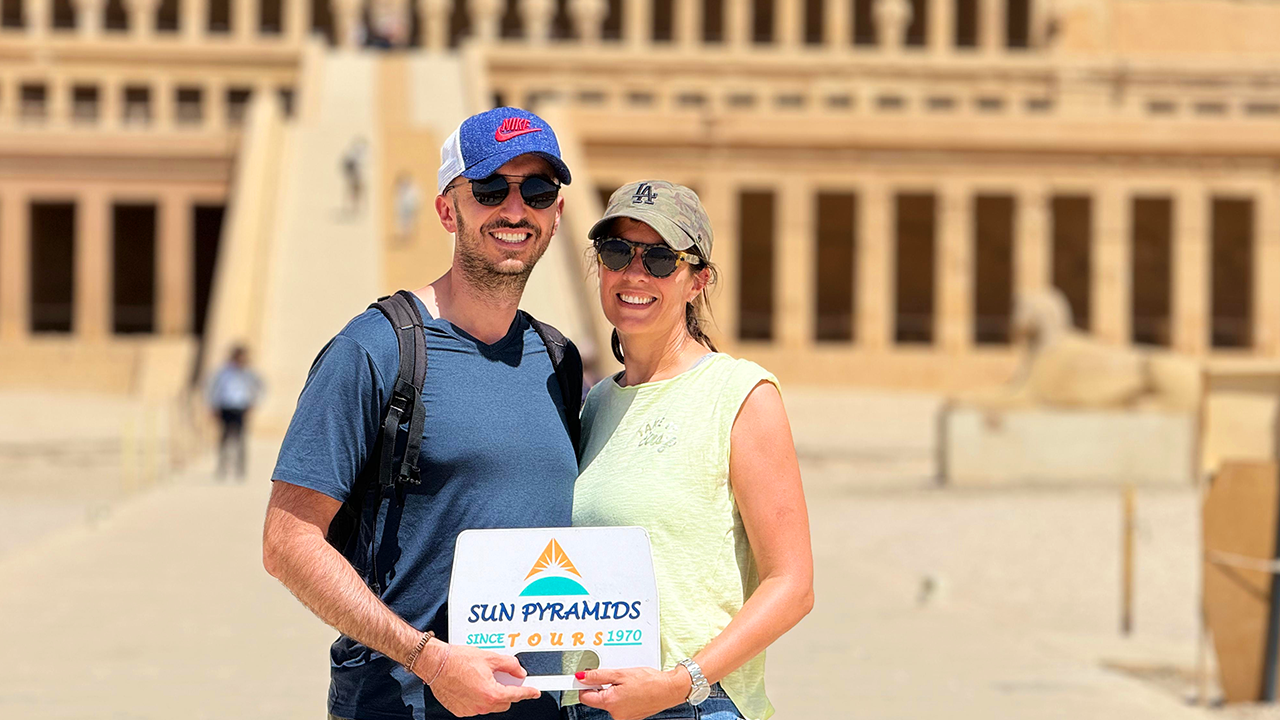
Experience the Temple of Hatshepsut and other Luxor attractions with Sun Pyramids Tours! Our expert guides will provide you with insights and a seamless travel experience. Book your adventure today and immerse yourself in the wonders of ancient Egypt!

Here are some tips to make your visit more enjoyable and memorable:
Appreciate the beauty and history of the temple and learn more about Hatshepsut and her remarkable reign.

Customized Itineraries : Sun Pyramids Tours offers tailored itineraries to suit your preferences. Whether you're interested in historical sites, cultural immersion, or adventure activities, we can design a tour that matches your interests.
Local Connections and Insider Access : Sun Pyramids Tours can provide you with unique opportunities and insider access to attractions and experiences that may not be easily accessible to independent travelers.
Customer Satisfaction : Sun Pyramids Tours prides itself on providing excellent customer service and ensuring customer satisfaction. They strive to meet and exceed your expectations, making your trip enjoyable and memorable. Add trip advisor reviews, Facebook page reviews, etc.
Safety and Security : Sun Pyramids Tours prioritizes the safety and security of their guests. We work with trusted partners, adhere to safety guidelines, and provide support throughout your journey to ensure a safe and comfortable travel experience.

.DvizhAGb.gif)
查看更多
There are no frequently asked questions :)
Offers
Make Trip
trips
Home